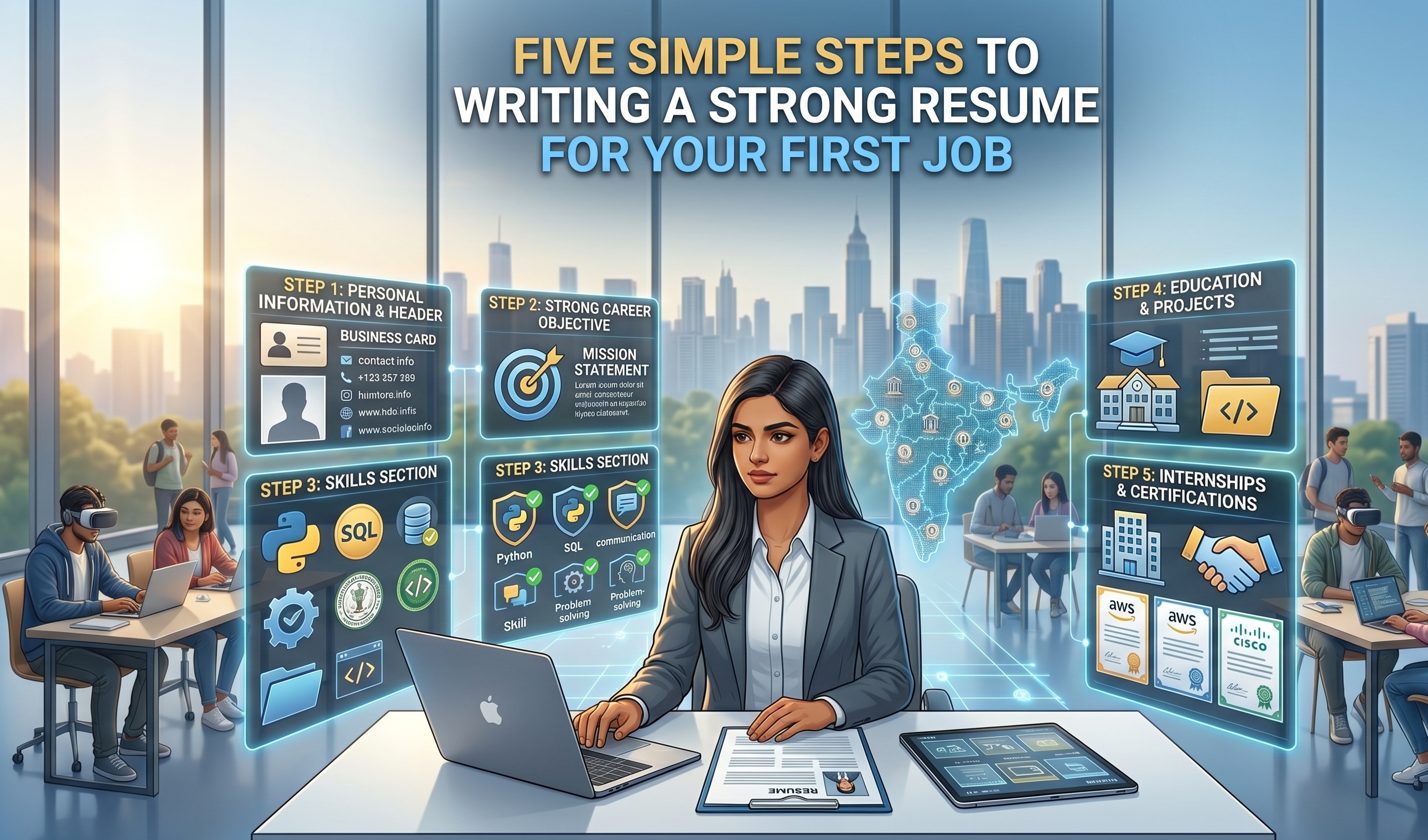
Five Simple Steps to Writing a Strong Resume for Your First Job
You think your CV template is fine? Look at that layout. Is the font Arial? Times New Roman? Here's how to make it stand out.

Writing your first resume often feels like a paradox: you need experience to get a job, but you need a job to get experience. The way out of this loop is understanding what recruiters actually look for at the entry level.
Most companies hiring freshers are not expecting years of experience. They are looking for Proof of Execution — evidence that you can build, learn, and deliver structured work independently.
A strong resume is not a list of everything you know. It is a structured demonstration of how you think, build, and solve problems.
1. Choose a Clean, Minimalist Layout
Before content is even read, design creates the first impression. Recruiters scanning hundreds of resumes prioritize clarity and structure.
Key Design Principles
- Keep it strictly one page
- Use a single-column format for readability
- Avoid graphics, photos, and skill rating bars
- Maintain consistent spacing and typography
2. Categorize Your Technical Skills
Skills should be structured, not dumped randomly. Clear grouping helps recruiters quickly understand your technical profile.
Example Skill Structure
- Languages: Java, JavaScript, SQL
- Web Stack: MongoDB, Express.js, React, Node.js (MERN)
- UI/Design: Tailwind CSS, Responsive Design
- Tools: Git, GitHub, Postman, VS Code
Only include technologies you can confidently explain in an interview.
3. Treat Projects as Work Experience
For freshers, projects are the most important section of the resume. They should demonstrate real engineering thinking, not just basic tutorials.
Strong Project Description Format
Architected a full-stack MERN-based project tracking system using recursive data models to manage deeply nested task hierarchies, improving query efficiency and scalability.
- Action: What you built and with which stack
- Technical Depth: Architecture and design decisions
- Impact: Performance or scalability improvement
4. Quantify Everything Possible
Numbers make achievements credible. Even academic or extracurricular work becomes stronger when quantified.
| Instead of | Write this |
|---|---|
| Helped organize a college event | Coordinated logistics for a 3-day hackathon with 40+ teams |
| Built a website | Developed a responsive dashboard using Tailwind CSS, improving mobile performance by 25% |
5. Proofread and Validate Everything
A resume with broken links or typos signals poor attention to detail — a major red flag for technical roles.
- Verify GitHub and LinkedIn links
- Ensure all project repositories are clean and public
- Write proper READMEs for every project
- Read your resume aloud to catch errors
Final Mindset
A strong resume does not just list skills — it demonstrates structured thinking. When your projects, skills, and descriptions clearly show execution ability, your resume stops being a student profile and starts becoming a professional signal.