After B.Tech, Which Course Is Best in 2025? (AI, ML, Full Stack, MBA, M.Tech)
Choosing the right course after B.Tech is one of the most important decisions of your career. This guide breaks down the top options — AI, ML, Full Stack, MBA, and M.Tech — so you can make a confident, informed choice.
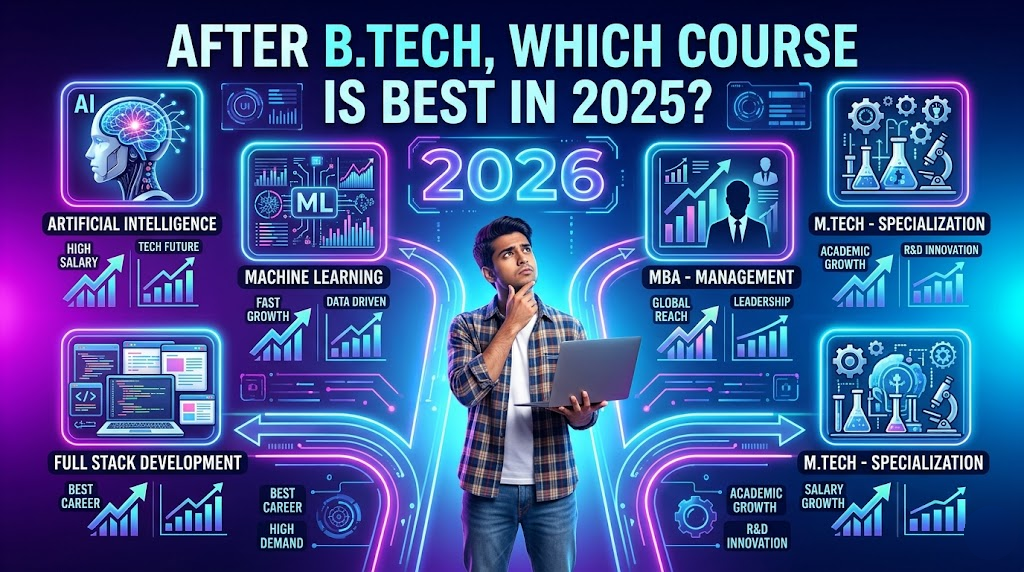
You've crossed the finish line — four years of engineering, late-night labs, and semester exams. Now comes the question everyone around you seems to have an opinion on: what next? The good news is that 2025 offers more high-quality options than ever before. The challenge is picking the one that actually fits your goals.
There is no single "best" course after B.Tech. The right choice depends on your career goals, financial situation, and how much time you're willing to invest. This guide helps you weigh each option honestly.
1. Artificial Intelligence & Machine Learning (AI/ML)
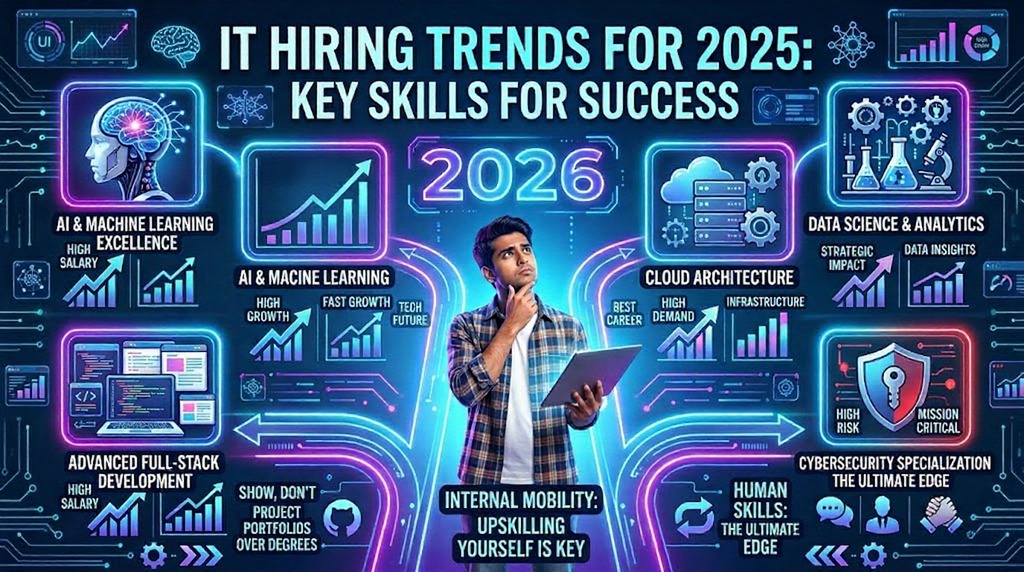
AI and ML remain the most in-demand specialisations in the tech industry. If you enjoyed mathematics, statistics, or data-heavy subjects during your B.Tech, this path is a natural fit. Roles like ML Engineer, Data Scientist, and AI Research Engineer command some of the highest starting salaries in the industry — often ₹8–20 LPA for freshers with strong portfolios.
Best suited for: Students from CS, IT, ECE, or EEE backgrounds with a solid grip on Python and linear algebra.
- Duration: 6 months (certification) to 2 years (M.Tech/MS)
- Top platforms: IITs (MTech AI), BITS Pilani, Coursera, Blackbucks PG Programs
- Average starting salary: ₹8–18 LPA
2. Full Stack Development
Full Stack is the fastest route from graduation to a job offer. A focused 6–12 month program can make you job-ready for roles at startups and product companies. The demand for developers who can handle both front-end and back-end work is consistently high, and the barrier to entry is lower than AI/ML.
Best suited for: Students who enjoy building things, have some coding experience, and want to start earning quickly.
- Duration: 6–12 months
- Key skills: React, Node.js, databases, REST APIs, cloud basics
- Average starting salary: ₹5–12 LPA
"The best engineers I've hired didn't have the fanciest degrees — they had strong portfolios and could ship working code." — Engineering Manager, Hyderabad-based SaaS startup
3. MBA
An MBA after B.Tech is a classic combination, especially if you're drawn to product management, consulting, or entrepreneurship. A top-tier MBA (IIMs, ISB) can dramatically accelerate your career trajectory, but it comes with a significant time and financial investment.
Best suited for: Students who want to move into business, management, or product roles and are willing to invest 2 years and ₹15–30 lakhs.
- Duration: 2 years (full-time) or 1 year (executive, post-experience)
- Entrance exams: CAT, GMAT, XAT
- Average starting salary (top schools): ₹15–30 LPA
4. M.Tech
M.Tech is the right choice if you want to go deep into a technical domain — VLSI, embedded systems, structural engineering, or research. It's also the gateway to a PhD or a career in R&D. GATE-qualified candidates can pursue M.Tech at IITs and NITs with a stipend, making it financially viable.
Best suited for: Students passionate about a specific engineering domain, research, or academia.
- Duration: 2 years
- Entrance: GATE (for IITs/NITs with stipend)
- Average starting salary: ₹6–14 LPA (core engineering roles)
5. Post Graduate Programs (Industry-Focused)
Industry-aligned PG programs — like those offered by Blackbucks — bridge the gap between academic knowledge and what employers actually need. These programs combine technical upskilling with placement support, making them a practical alternative to traditional degrees for students who want to enter the workforce quickly.
Best suited for: Students who want structured learning with direct placement assistance and industry mentorship.
How to Decide
Ask yourself three questions before committing:
- What kind of work do I actually enjoy? Building products, analysing data, managing teams, or researching problems?
- How much time and money can I invest? A 6-month certification and a 2-year MBA are very different commitments.
- What does the job market look like for this role in 3 years? Trends matter — AI and cloud skills are only growing in demand.
There's no wrong answer here — only the answer that's wrong for you. Take the time to research, talk to people already working in those roles, and use tools like Blackbucks TaPTaP to assess where your strengths actually lie.