9 proven ways to achieve a career while you are still a student
If you are still in college and looking for a job, the answer is simple: set realistic expectations about your career path and start early.

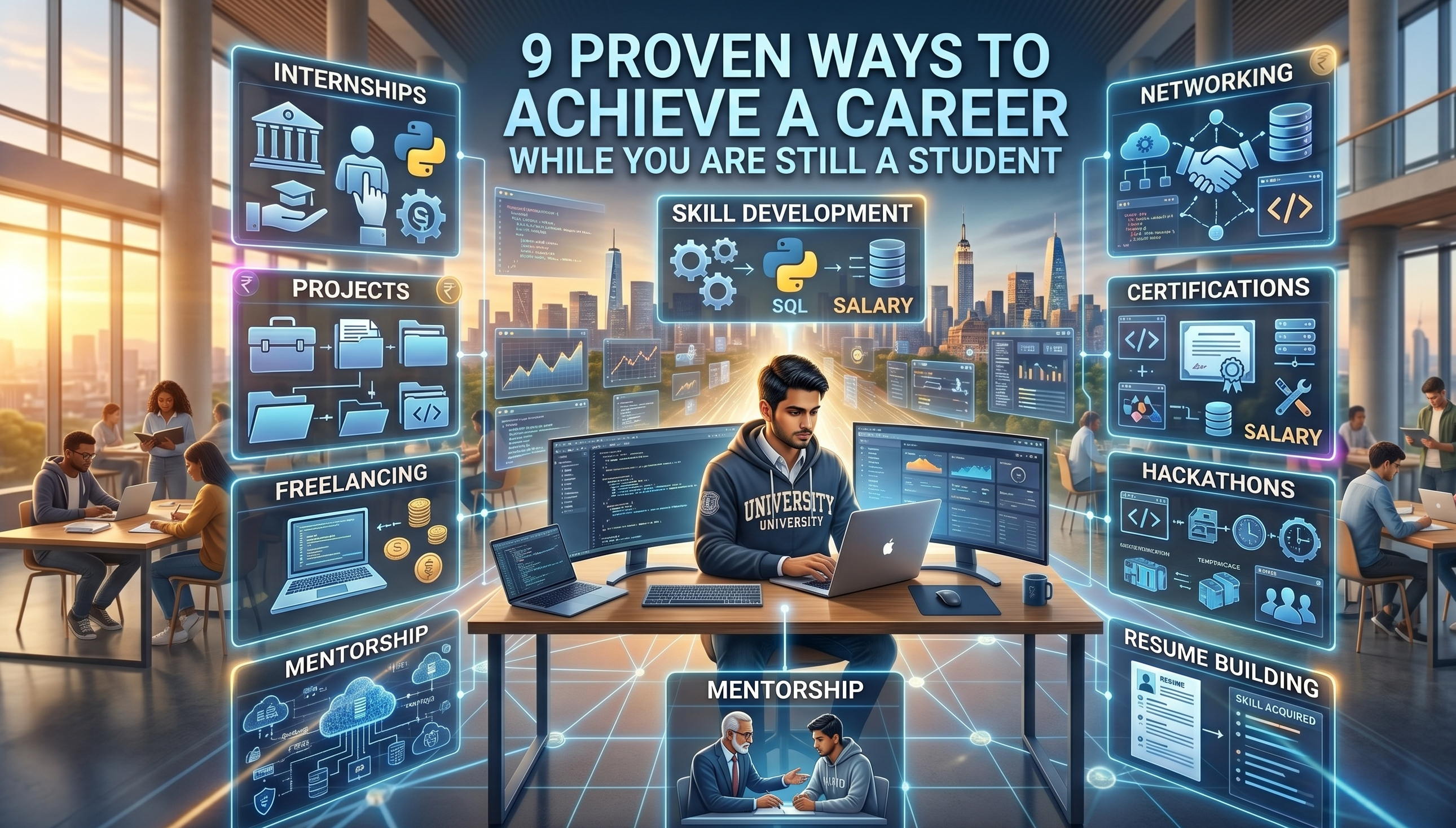
Balancing academics with the ambition to start a professional career early can feel overwhelming. But the modern digital economy has removed many traditional barriers — meaning students today can begin building real career momentum before graduation.
The key is not working harder in random directions, but following a repeatable execution framework that builds visibility, skill depth, and real-world proof of work.
You don’t need to wait for graduation to start your career. You need structured proof that you can already function like a professional.
1. Build a “Proof of Execution” Portfolio
Your portfolio is now more important than your location, college, or resume alone. It is your primary signal of ability.
Instead of simple tutorial projects, build systems that reflect real engineering depth — such as hierarchical task trackers or scalable dashboards using recursive data models.
2. Commit to a Specialized Tech Stack
Generalists struggle to stand out in competitive markets. Specialization in high-demand stacks improves visibility and career leverage.
Core Focus Areas
- Full-Stack Development: MERN stack (MongoDB, Express.js, React, Node.js)
- Backend Engineering: Java + strong data structures and system design fundamentals
3. Embrace Production-Ready Design
Modern companies value not just functionality, but clean, scalable user experience design.
Using utility-first frameworks like Tailwind CSS helps you build interfaces that are clean, responsive, and production-ready.
4. Use Structured Productivity Systems
Managing academics and career preparation requires disciplined tracking of goals and milestones.
- Break work into daily execution goals
- Track project milestones consistently
- Measure progress instead of just effort
5. Build in Public
Visibility is a major advantage in the modern hiring ecosystem. Your GitHub and LinkedIn activity act as continuous proof of growth.
- Write detailed README files for projects
- Explain architecture decisions clearly
- Share progress updates consistently
6. Target Remote-First Opportunities
The global job market is accessible from anywhere. Remote-first startups and agencies often prioritize execution over location or pedigree.
7. Master the 3-Part Answer Framework
- Headline: Clearly state your technical strength
- Evidence: Provide a short real project example
- Tie-In: Connect it directly to the role or company
Structured communication often matters as much as technical skill in interviews.
8. Execute Value-First Outreach
Instead of mass applications, focus on targeted outreach to engineering leads and product teams.
- Reference their work specifically
- Share relevant projects or case studies
- Avoid asking directly for jobs upfront
9. Treat Feedback as System Improvement
Every rejection or failed interview is data — not failure.
- Document weak areas after each attempt
- Identify recurring knowledge gaps
- Iterate your preparation like an engineering cycle
Final Reality
Career acceleration comes from visible execution. Students who consistently build, document, and refine real systems naturally move ahead of those who only prepare theoretically.